
Excelsior Ambulance Service
Basic Life Support
Quick Links
- How Does Excelsior BLS Support System Reliability Across The Southeast?
- What Training And Experience Sets Excelsior EMTs Apart?
- What Areas Of The Southeast Is Excelsior BLS available?
- How Does A Basic Life Support Ambulance Provide Pre-Hospital Care?
- What Makes Excelsior BLS The Best Choice For Elite EMS In The Southeast?
- Basic Life Support FAQs
How Does Excelsior BLS Support System Reliability Across the Southeast?
Excelsior BLS supports system reliability by providing hospitals and health groups with a dependable, lower-acuity transport option. Not every ambulance request requires Advanced Life Support or specialty transport. When BLS is used appropriately, healthcare organizations can move medically stable patients while keeping higher-acuity resources available for more complex calls.
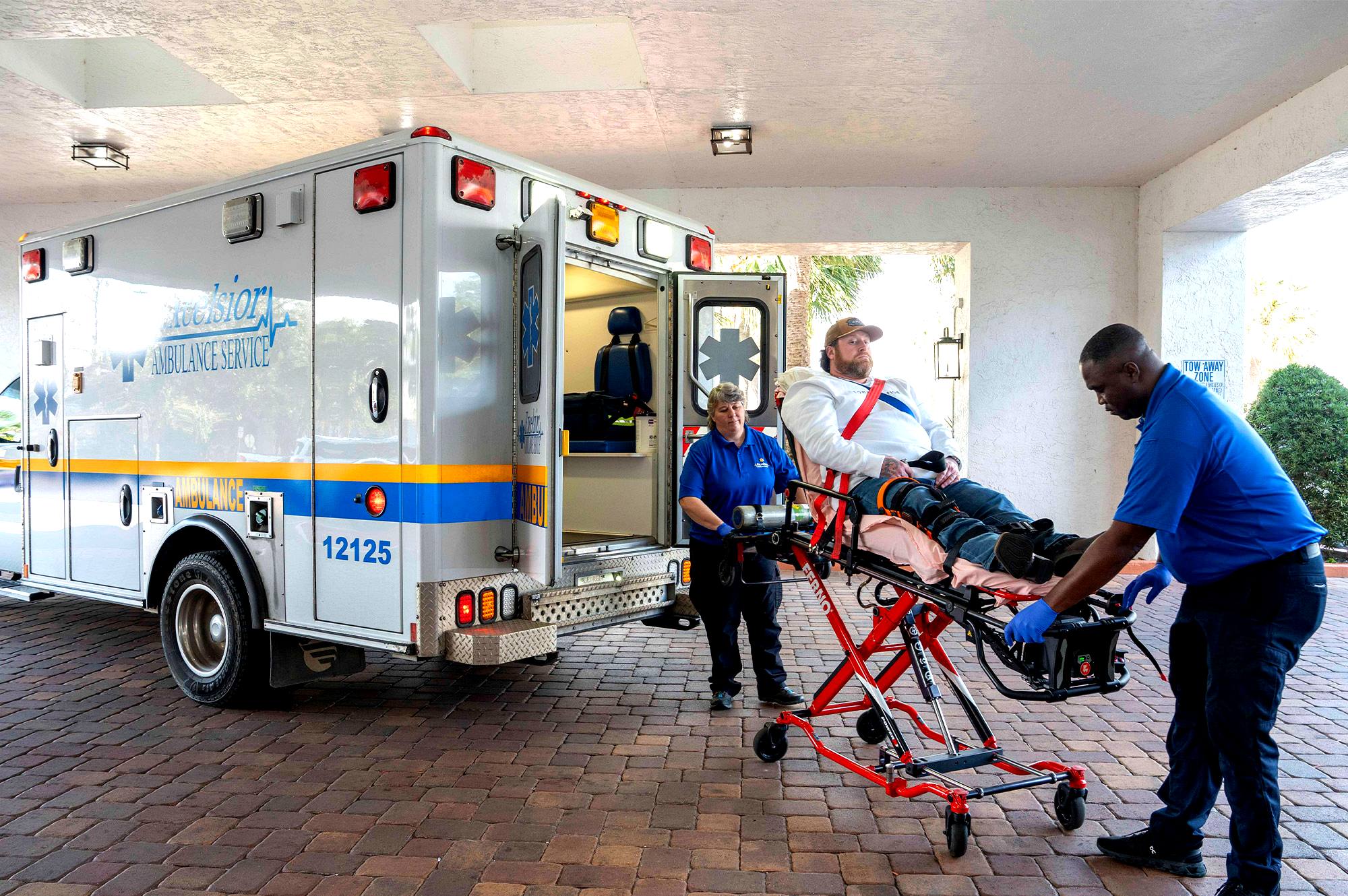
A BLS ambulance is used for patients who need ambulance-level support but do not require advanced life support or critical care transport. Basic Life Support focuses on essential pre-hospital care, including patient assessment, CPR, AED (Automated External Defibrillator) use, oxygen support, bleeding control, basic airway management, splinting, and safe stretcher movement.
For large hospitals and health systems, reliable BLS coverage can support discharge flow, reduce transport delays, and help teams match the right level of care to each transport request.
What System Operational Solutions Does
Excelsior BLS Support?
Excelsior BLS supports operational needs that affect hospital flow, facility coordination, and healthcare system performance. Lower-acuity transport may seem simple, but it plays an important role in keeping beds available, avoiding unnecessary ALS deployment, and helping care teams move patients at the right time.
Common system operational solutions supported by Excelsior BLS include:
- Hospital discharge transportation
- Interfacility transport for stable patients
- Skilled nursing and rehabilitation facility transfers
- Stretcher transport for patients who cannot sit upright safely
- Oxygen support during transport
- Basic monitoring for stable medical needs
- Lower-acuity emergency response when EMT-level care is appropriate
- Recurring BLS coverage for healthcare organizations
Choosing the right transport level matters. BLS helps prevent overuse of advanced resources while still providing patients with ambulance-level support when a non-medical vehicle is not appropriate.

What Training and Experience Sets Excelsior EMTs Apart?
Excelsior BLS ambulances are staffed by trained EMTs who can provide Basic Life Support within their approved scope of care. Excelsior crews assess patients, monitor changes in condition, provide oxygen when appropriate, perform CPR, use an AED, support basic airway needs, control bleeding, apply splints, and assist with safe patient movement.
Our EMTs are different at Excelsior; we allow them to work up to their complete scope of practice for each state in which we operate, where most services do not.
This approach matters for healthcare organizations and for EMTs who want to practice in a more capable EMS environment. Excelsior supports EMTs with a model that values clinical readiness, operational discipline, and professional growth. For hospitals and health groups, that means BLS transports are handled by crews prepared to do more than simply move a patient from one location to another.

What Areas of the Southeast Is Excelsior BLS Available?
Excelsior provides BLS ambulance service across multiple states in the Southeast. This regional footprint gives hospitals and health groups access to a broader EMS partner that can support multiple facilities, markets, or transport needs.
Excelsior operates across:
- Georgia
- Alabama
- South Carolina
- Florida
Multi-state coverage is important for large healthcare organizations that need consistency across different locations. A hospital system may need BLS support for one facility, recurring transport support across several facilities, or coordinated service in more than one state.
Excelsior’s regional model helps healthcare groups work with a single EMS partner that understands lower-acuity transport, emergency medical service, and non-emergency ambulance operations. This can make coordination easier for teams that manage high transport volume across the Southeast.
How Does a Basic Life Support Ambulance Provide
Pre-Hospital Care?
A basic life support ambulance provides pre-hospital care through assessment, BLS-level intervention, monitoring, and transfer of care. The process starts before pickup, when dispatch details help identify the patient’s condition, destination, mobility needs, oxygen needs, and timing requirements.
When the Excelsior crew arrives, they assess the patient and confirm the transport plan. During the trip, they provide care within the scope of BLS. This may include oxygen support, positioning, basic airway support, bleeding control, CPR, AED use, or continued observation. If the patient’s condition changes, the crew can identify the concern and escalate care according to protocol.
At the destination, the crew completes a handoff with the receiving team. This helps maintain continuity between the sending and receiving settings.
What Makes Excelsior BLS the Best Choice for Elite EMS in the Southeast?
Excelsior BLS supports lower-acuity ambulance transportation within a broader EMS model built for healthcare partners across the Southeast. Basic Life Support may not require advanced clinical intervention, but it still depends on equipment readiness, trained crews, clear communication, and dependable dispatch.
Excelsior brings together Basic Life Support, emergency medical services, non-emergency transport, and coordinated EMS operations to deliver system-level solutions for hospitals and healthcare partners, working as part of the continuum of care between the sending and receiving facilities. The goal is to make movement of lower-acuity patients more dependable while keeping higher-acuity EMS resources available for patients who need them.
To coordinate BLS coverage, recurring transport needs, or system-level EMS support, contact Excelsior Ambulance Service today.

Excelsior Basic Life Support – FAQs
How does BLS transport support hospital throughput?
BLS transport supports hospital throughput by helping medically stable patients move to the next care setting when ambulance-level support is still needed. Reliable BLS availability can reduce delays tied to discharge timing, bed turnover, and interfacility coordination. For hospitals and health groups, dependable lower-acuity transport helps keep advanced EMS resources available for higher-acuity calls.
When should a hospital use BLS instead of ALS?
Hospitals may use BLS when the patient is stable but requires stretcher transport, supplemental oxygen, basic monitoring, safe movement, or EMT-level care during transport. ALS may be needed when the patient requires advanced medications, cardiac monitoring, advanced airway support, or a higher level of clinical intervention. Matching the transport level to the patient’s needs helps protect system resources.
Can Excelsior support recurring BLS transport needs?
Yes. Excelsior can support recurring BLS transport needs for hospitals, health groups, skilled nursing facilities, rehabilitation centers, and other healthcare organizations. Recurring coverage can help organizations manage routine discharge transportation, interfacility movement, and predictable lower-acuity transport volume. This gives healthcare teams a more reliable option for planned transport needs.
What information should healthcare teams provide when scheduling BLS transport?
Healthcare teams should provide the pickup location, destination, mobility status, oxygen needs, infection control concerns, timing requirements, and any relevant clinical details. Clear information helps the BLS crew prepare the right equipment and understand the level of support needed during transport. Accurate scheduling details also help reduce delays during pickup and handoff.
How does BLS help preserve higher-acuity EMS resources?
BLS helps preserve higher-acuity EMS resources by handling transports that do not require ALS or specialty care. When stable patients are moved by BLS crews, advanced units can remain available for calls involving more complex clinical needs. This supports better resource allocation for hospitals, health systems, and EMS operations across the region.
What makes Excelsior a strong workplace for EMTs?
Excelsior gives EMTs the opportunity to work in a system that values clinical readiness, professional growth, and the full use of approved scope of practice. EMTs who want more than routine transport may find Excelsior’s model especially appealing. The company’s broader EMS operations allow team members to build experience in a high-performance environment across the Southeast.