
Critical Care Transportation (CCT)
Quick Links
- How Has Excelsior Critical Care Transport Performed In Crisis Situations?
- What Critical Care Transport System-Level Solutions Does Excelsior Provide Across The Southeast?
- What Advanced In-Field Capacities Are CCT Operators Trained For?
- What CCT Innovations Has Excelsior Been A Part Of?
- Critical Care Transport Equipment: What’s The Excelsior Philosophy?
- What Makes Excelsior Critical Care Transport The Best Choice For Southeast Hospitals?
- Critical Care Transportation FAQs
How Has Excelsior Critical Care Transport Performed in Crisis Situations?
When the 2025 Fort Stewart shooting left 5 wounded, several ambulance companies responded. Excelsior was the first at the hospital. When the others arrived, they were turned away by the hospital staff:
“Excelsior is here; they’ve got it.”
That kind of response reflects more than emergency availability. It reflects training, readiness, clinical capability, and the ability to support high-acuity and specialty transports when a crisis requires disciplined execution.
In crisis situations, hospitals need more than available units. They need crews that can move quickly and support the receiving team without adding confusion.
What Critical Care Transport System-Level Solutions Does Excelsior Provide Across the Southeast?
Excelsior CCT supports health systems by helping move high-acuity patients between facilities when the originating location cannot provide the next level of care. These transports can affect bed availability, emergency department flow, specialty access, and the ability to decompress one facility while another prepares to receive the patient.
Critical Care Transport system solutions may include:
- High-acuity interfacility transfers
- ICU-level movement between hospitals
- Rural-to-tertiary care transfers
- Respiratory support during transport
- Ventilator-capable transfers
- Multi-medication infusion support
- Access to specialty centers when time and level of care matter
Excelsior’s multi-state footprint across the Southeast helps hospitals and health systems coordinate advanced transport across broader regions. CCT operates within a larger EMS model that includes Basic Life Support (BLS), Advanced Life Support (ALS), Inter-Facility Transfers, Special Needs Transportation (SNT), and Event Coverage when system demand increases.

What Advanced In-Field Capacities Are CCT Operators Trained For?
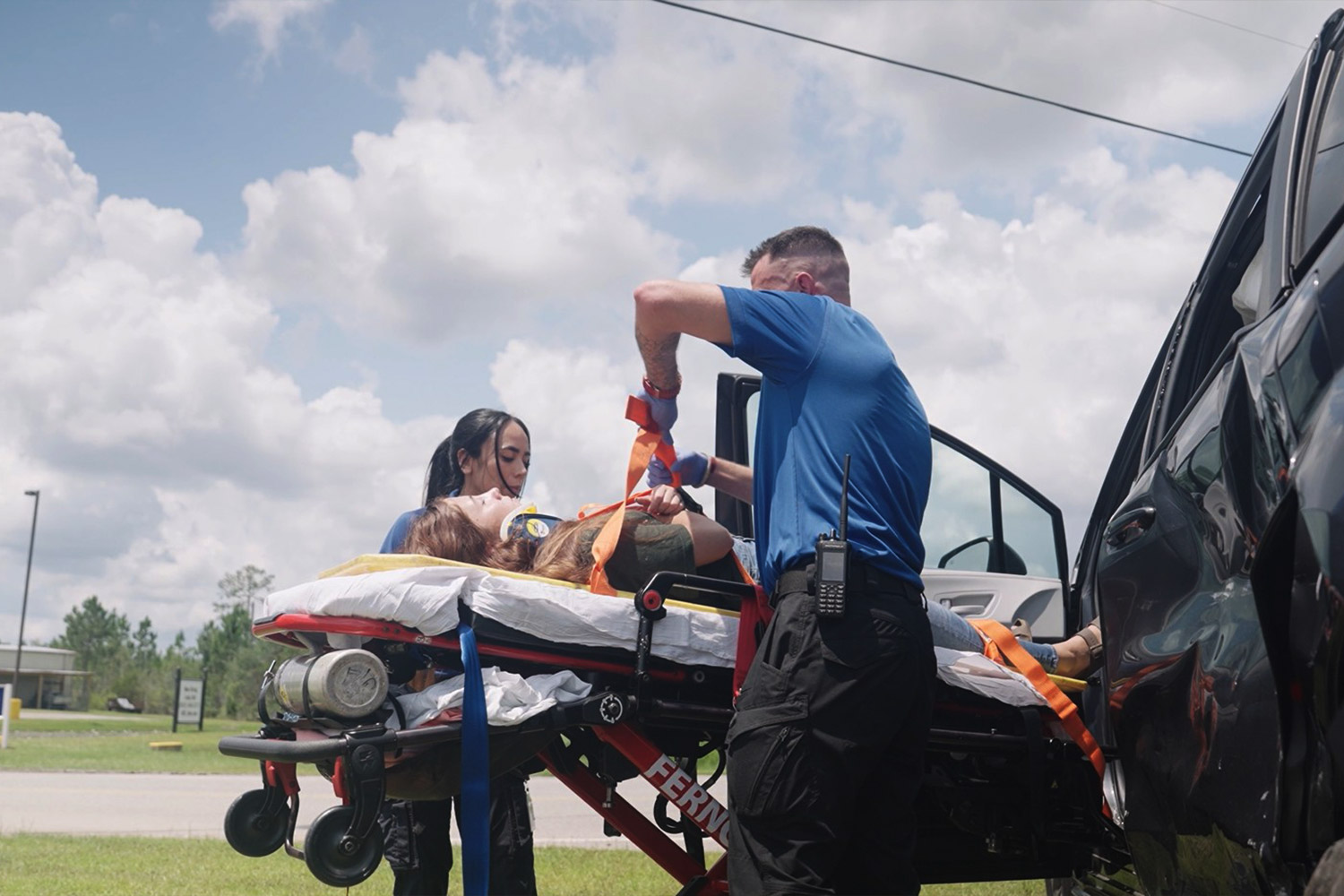
Excelsior CCT operators are trained for transports that require more clinical preparation than BLS or ALS transport. These transports may involve critically ill patients, complex medication needs, ventilator support, respiratory compromise, cardiac monitoring, or a higher risk of clinical changes during transport.
Advanced in-field capabilities may include ventilator management, specialized medications, multiple medication infusions, advanced monitoring, airway support, and clinical decision-making during transport. Excelsior’s broader advanced capabilities also include HFNC, IV antibiotics in the field, field-drawn lab samples, and PLS licensure, which allows paramedics to manage ventilators.
For clinicians, CCT creates a demanding environment where preparation matters while providing hospitals with access to a team trained to manage complexity between sending and receiving facilities. The goal is not just movement but continuity of critical care during transport.

What CCT Innovations Have Excelsior Been a Part Of?
Excelsior has built its CCT model around clinical advancement rather than minimum capability. Before COVID-19, Excelsior was one of the first EMS companies in Georgia to receive PLS licensure, allowing paramedics to manage ventilators. That capability became especially important during the pandemic and continues to support higher-acuity respiratory transports.
Excelsior is also currently the only provider offering High-Flow Nasal Cannula (HFNC) in rural areas across the region. This matters for hospitals outside major metro markets because HFNC-capable ground transport is not always available where it is needed most.
Additional advanced clinical capabilities include IV antibiotics in the field, field-drawn lab samples, blood products (currently in development), and POCUS for heart attacks and trauma (currently in development). These are not surface-level upgrades. They reflect a progressive EMS model built around advanced clinical capability in the field.
Critical Care Transport Equipment: What’s the Excelsior Philosophy?
In an environment where most other ambulance companies have shifted toward optimizing for profitability, Excelsior’s founder, Dr. Graham, prioritizes a different approach.
“We invest in our people and our equipment because we know that’s how we save lives,” Dr. Graham said. “If a $1,000 piece of equipment saves even one life, we’re going to have that equipment.”
This more progressive view of equipment benefits clinicians, who are able to work in an environment where the tools meet expectations, and hospitals, which receive advanced transport support.
Critical Care Transportation depends on equipment readiness. Ventilators, monitoring tools, medication support, respiratory equipment, infusion pumps, and specialty transport resources all affect what can be safely managed during transport. For health systems, this means equipment is not just an operational detail. It is part of clinical capability.
What Makes Excelsior Critical Care Transport the Best Choice for Hospitals in the Southeast?
Excelsior CCT is built for hospitals and health systems that need critical care transport handled with clinical depth and operational discipline. These transports are often time-sensitive, resource-intensive, and dependent on coordination between sending and receiving teams. The CCT program is supported by ventilator-capable care, HFNC in rural markets, PLS licensure, IV antibiotics, field-drawn lab samples, blood products (currently in development), and POCUS (currently in development).
For prospective paramedics and medics, CCT also represents a higher-level clinical environment. These transports require confidence, training, and the ability to operate with focus during complex transports.
To coordinate Critical Care Transportation coverage, high-acuity transfer support, or system-level EMS solutions, contact Excelsior Ambulance Service today.

Critical Care Transportation – FAQs
What clinical information should hospitals provide before a CCT request?
Hospitals should provide the reason for transfer, current level of care, vital trends, airway status, ventilator settings if applicable, medication infusions, monitoring needs, isolation status, equipment needs, and receiving facility details. CCT depends on preparation before arrival. The more complete the information, the easier it is to send the right crew, prepare the right equipment, and reduce avoidable delays during transfer.
How does CCT support hospitals without tying up internal clinical teams?
CCT supports hospitals by extending advanced care beyond the sending facility while allowing internal teams to stay focused on current census, emergency department flow, and inpatient needs. When the transport team arrives prepared for ventilator support, advanced monitoring, medication infusions, or respiratory needs, the sending team can complete the handoff without having to build a one-off transport plan from scratch.
Why does PLS licensure matter for Critical Care Transportation?
PLS licensure matters because it allows trained paramedics to manage ventilators during transport. For hospitals moving patients with advanced respiratory needs, that capability can expand what is possible through ground transport. Excelsior’s history as one of the first EMS companies in Georgia to receive PLS licensure reflects a long-term commitment to advanced transport medicine rather than minimum service capability.
How can HFNC capability help rural hospitals?
HFNC capability can help rural hospitals move patients with more complex respiratory needs when local specialty resources are limited. Many HFNC-capable services are concentrated in metro markets, leaving rural hospitals with fewer options. Excelsior’s HFNC capability supports advanced ground movement when respiratory support must continue between facilities.
What makes Excelsior CCT different for medics seeking clinical growth?
Excelsior CCT gives medics exposure to higher-acuity transports, ventilator-capable care, advanced respiratory support, medication infusions, and complex facility coordination. This is a stronger clinical environment for medics who want to keep growing beyond routine calls. Training, equipment readiness, and advanced capability create a workplace where clinical development is part of the operation.
When is CCT a better option than medevac transport?
CCT may be a better option when advanced ground transport can safely support the patient’s needs and air transport is delayed, unavailable, weather-limited, cost-prohibitive, or difficult to access. Ground CCT can provide a controlled transport environment with advanced monitoring, respiratory support, and medication management. For many regional transfers, it can be the right clinical choice.
How does CCT support system-level reliability during surge conditions?
CCT supports system-level reliability by giving hospitals a prepared option for high-acuity movement during periods of increased demand. When emergency departments, ICUs, or specialty services are under pressure, timely critical care transport can help move patients to the right facility and preserve internal capacity. Excelsior’s CCT model is built to support those high-pressure moments with trained crews and advanced equipment.