
Inter-Facility Transfers
Quick Links
- What Levels Of Inter-Facility Transport Can Excelsior Provide?
- What Inter-Facility Transport System Solutions Does Excelsior Provide?
- What Kind Of Patient Care Can Excelsior Provide For Inter-Facility Transport?
- How Is Excelsior Inter-Facility Transport A Medevac Alternative?
- How Does Excelsior Streamline The Day-Of Inter-Facility Transportation?
- What Makes Excelsior The Best Choice For Southeast Inter-Facility Transport?
- Inter-Facility Transfers FAQs
What Levels of Inter-Facility Transport Can Excelsior Provide?
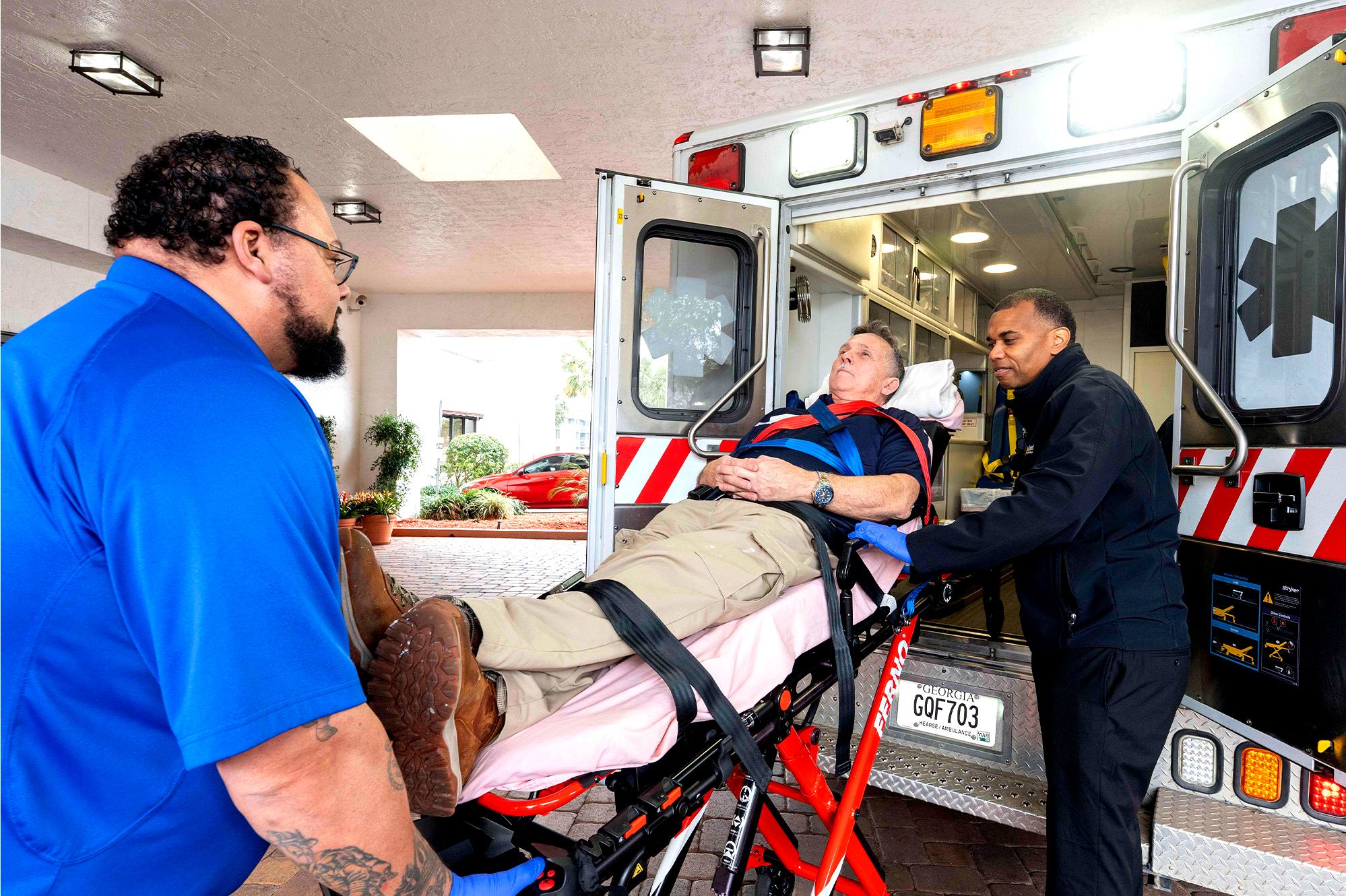
Excelsior provides inter-facility transfers at multiple levels of care, including Basic Life Support (BLS), Advanced Life Support (ALS), and Critical Care Transportation. This allows hospitals and health systems to match the transport level to the patient’s clinical needs rather than placing every transfer into the same category.
Excelsior can help support transfers from smaller facilities to specialty centers, between hospitals within a health system, or from acute care settings to the next appropriate facility. The goal is to keep the appropriate resources available and ensure each patient receives the care they need during the transfer.
Basic Life Support (BLS) may be appropriate for medically stable patients who need stretcher support, oxygen, basic monitoring, or EMT-level care. Advanced Life Support (ALS) may be used when the patient requires paramedic-level assessment, cardiac monitoring, IV access, medication support, or advanced airway management. Critical Care Transportation supports higher-acuity transfers that may require ventilator management, multiple medication infusions, advanced monitoring, or a higher level of clinical intervention.
What Inter-Facility Transport System Solutions Does
Excelsior Provide?
Excelsior inter-facility transportation supports system-level solutions for hospitals and healthcare partners by helping organizations move patients efficiently and at the right time. Delayed transfers can affect emergency department flow, bed availability, specialty access, and discharge planning. This makes inter-facility transfers easier to coordinate for hospitals that manage a steady transfer volume or operate across multiple sites.
Common system solutions may include:
- Transfers from community hospitals to specialty centers
- Movement between hospitals within the same health system
- Higher-acuity transfers requiring ALS or Critical Care Transportation
- Rural-to-tertiary transfers when specialty services are not available locally
- Discharge-related inter-facility transfers
- Surge or overflow support during periods of high transport demand
For health systems, inter-facility transportation is not only a logistics function but also a critical part of clinical access and system reliability.

What Kind of Patient Care Can Excelsior Provide for Inter-Facility Transport?
Excelsior inter-facility transport can support a wide range of clinical needs during movement between facilities. The level of care depends on the patient’s condition, the sending facility’s requirements, the receiving facility’s expectations, and the scope of care required during transport.
Clinical support may include BLS monitoring, oxygen support, ALS assessment, cardiac monitoring, IV access, medication administration, airway support, ventilator management when clinically appropriate, and critical care monitoring for higher-acuity transfers.
Excelsior also brings advanced in-field capabilities into the inter-facility setting. These include High-Flow Nasal Cannula (HFNC) in rural areas, IV antibiotics in the field, field-drawn lab samples, and PLS licensure, which allows paramedics to manage ventilators. Blood products (currently in development) and POCUS for heart attacks and trauma (currently in development) are also part of Excelsior’s progressive clinical direction.
These capabilities help bridge the gap between facilities when patients need more than basic transportation.

How Is Excelsior Inter-Facility Transport a Medevac Alternative?
Excelsior inter-facility transport can serve as a Medevac alternative when advanced ground transport is clinically appropriate, and air transport is not the best option. Weather, availability, patient condition, distance, landing access, and cost can all affect whether air transport makes sense for a transfer.
Advanced ground transport can provide a controlled EMS environment while keeping the patient connected to trained clinicians and appropriate equipment. Depending on the case, Excelsior can support ALS or Critical Care transfers with cardiac monitoring, IV medications, respiratory support, ventilator management, HFNC, or other care within the requested transport level.
This is especially important for hospitals in rural or regional markets. When a patient needs to move to a higher level of care, Excelsior can help close the gap between facilities with High-Acuity and Specialty Transports across the Southeast.
How Does Excelsior Streamline the Day-of Inter-Facility Transportation?
Excelsior streamlines day-of inter-facility transportation by focusing on clear dispatch details, appropriate unit selection, and communication between sending and receiving teams. The goal is to reduce confusion before pickup and support a smoother transfer from one facility to the next.
Day-of coordination starts with a transport request that includes the diagnosis or reason for transfer, timing expectations, and details needed for care en route.
Excelsior uses this information to identify the appropriate transport level and prepare the crew for the clinical needs of the transfer. During pickup, the crew confirms the plan, receives report, secures the patient, and prepares for transport. At arrival, the crew completes a handoff to support continuity of care.
What Makes Excelsior the Best Choice for Southeast Inter-Facility Transport?
Excelsior provides inter-facility transport for hospitals and health systems that need more than a basic transportation provider. The service is built around clinical excellence, advanced clinical capability, and high-performance operations across the Southeast.
Excelsior supports BLS, ALS, and Critical Care transfers, including High-Acuity and Specialty Transports for more complex movement between facilities. Advanced capabilities such as HFNC, IV antibiotics, field-drawn lab samples, PLS licensure, blood products (currently in development), and POCUS (currently in development) demonstrate a clinical model designed to keep moving forward.
For prospective EMTs and paramedics, inter-facility transport also creates opportunities to work in a more capable EMS environment. These calls require preparation, communication, and clinical discipline, especially when higher-acuity transfers are involved.
To coordinate inter-facility transfer coverage, recurring transportation needs, or system-level EMS support, contact Excelsior Ambulance Service today.

Inter-Facility Transfers – FAQs
How can inter-facility transport help reduce delays between referring and receiving facilities?
Inter-facility transport can reduce delays when the transport partner is prepared to match the requested level of care, gather the necessary clinical details, and coordinate directly with the sending and receiving teams. For hospitals and health systems, this helps prevent avoidable bottlenecks related to bed availability, specialist access, and transfer acceptance. Excelsior supports this process through coordinated dispatch, BLS, ALS, and Critical Care Transportation options, along with crews prepared for the clinical requirements of each transfer.
What clinical details should be confirmed before requesting an inter-facility transfer?
Before requesting an inter-facility transfer, the sending team should confirm the diagnosis or reason for transfer, current level of care, monitoring needs, airway or oxygen requirements, IV access, medication needs, mobility status, isolation precautions, equipment needs, and receiving facility details. Clear information helps Excelsior identify the right unit and crew for the transport. For EMTs and medics, this preparation also supports a safer handoff and a more efficient day-of transfer process.
How can hospitals determine the right transport level for a transfer?
Hospitals can determine the transport level by reviewing the patient’s current condition, monitoring needs, medication requirements, airway or respiratory status, mobility needs, and risk of clinical change during transport. Sending teams should also consider the receiving facility’s requirements. When the level is unclear, coordination with the transport provider can help ensure the transfer is matched to BLS, ALS, or Critical Care support.
What advanced clinical capabilities support Excelsior inter-facility transfers?
Excelsior’s advanced clinical capabilities include High-Flow Nasal Cannula (HFNC) in rural areas, IV antibiotics in the field, field-drawn lab samples, and PLS licensure, which allows paramedics to manage ventilators. Blood products (currently in development) and POCUS for heart attacks and trauma (currently in development) are part of Excelsior’s progressive clinical direction. These capabilities help support higher-acuity inter-facility transfers across the Southeast.
Can Excelsior support rural inter-facility transfers?
Yes. Excelsior supports rural inter-facility transfers for hospitals and health systems that need dependable transportation to specialty facilities or higher levels of care. Rural transfers may involve longer distances, limited access to specialty care, and fewer local transportation resources. Excelsior’s regional footprint and advanced ground transport capabilities help support these transfers when timing and level of care matter.
Why would a hospital use ground transport instead of Medevac?
A hospital may use advanced ground transport instead of Medevac when air transport is unavailable, delayed, weather-restricted, landing-access-limited, or not the best clinical choice. Ground transport may also be appropriate when the patient can be safely managed in an ALS or Critical Care ambulance. Excelsior supports this need through High-Acuity and Specialty Transports across the Southeast.
What experience do EMTs and medics gain from inter-facility transfers?
Excelsior gives EMTs and paramedics the opportunity to work in a progressive EMS environment with advanced equipment, complex transports, and meaningful clinical development. Inter-facility work can involve BLS, ALS, and Critical Care transport needs, giving crews experience across different levels of transport. For clinicians who want more than routine transport, Excelsior offers an environment built around Clinical Excellence and professional growth.